
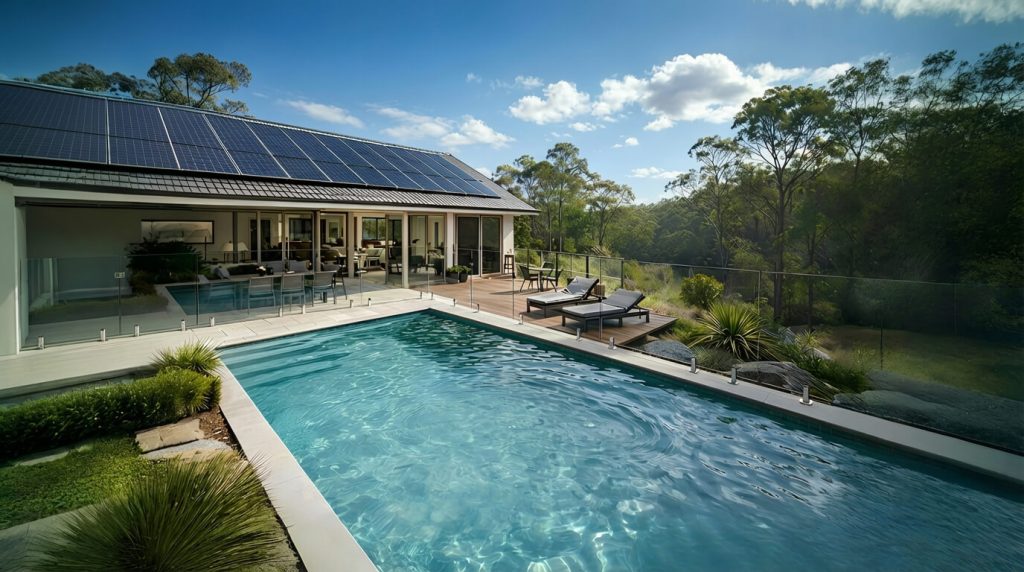
When the power goes out, having solar panels on your roof might seem like the perfect solution. After all, if your home generates its own electricity from the sun, shouldn’t it keep running when the electricity grid goes down?
Surprisingly, the answer is usually no.
Most standard grid-connected solar systems automatically shut down during a blackout, even when the sun is shining.
However, with the right solar battery storage system and backup configuration, it’s possible to keep essential appliances operating during a power outage.
For homeowners across the Gold Coast, Brisbane and South East Queensland, where summer storms can disrupt electricity supply, understanding how solar backup power works is worth considering.
Do Solar Panels Work When the Power Goes Out?
Most standard solar panel systems do not continue supplying electricity during a blackout.
This is because grid-connected solar systems are designed with a safety feature called anti-islanding protection.
When the electricity grid loses power, a conventional solar inverter automatically disconnects to prevent electricity from flowing into the network while electrical workers may be repairing damaged infrastructure.
That means your solar panels could be receiving plenty of sunlight, but your home may still be without electricity.
Some specialised solar systems can supply limited electricity without a battery, but this capability must be specifically designed and configured.
For most homeowners wanting reliable backup power, a compatible solar battery system is the more practical option.
How Does Solar Battery Backup Work?
A solar battery stores electricity generated by your solar panels so your household can use it later.
On a typical day, your system works through several stages:
- Solar panels generate electricity during daylight hours.
- Your home uses available solar electricity to power appliances.
- Excess electricity can charge your solar battery.
- Stored electricity can be used during the evening or whenever solar generation isn’t sufficient.
- If the battery becomes depleted, your home may need to draw electricity from the grid.
During a blackout, a properly configured backup system can disconnect from the electricity grid and supply stored electricity to selected household circuits or, where supported, the entire property.
Some systems can also continue using solar generation to recharge the battery during an outage.
However, not every solar battery automatically provides blackout protection.
Backup functionality depends on the battery, inverter, switching equipment and installation configuration.
If you’re considering solar battery storage, it’s important to discuss blackout protection with your installer before choosing a system.
What Can a Solar Battery Power During a Blackout?
The appliances your battery can operate depend on its usable storage capacity, power output and the way your home’s backup circuits are configured.
Many homeowners choose to prioritise essential appliances rather than attempting to power everything.
Common backup priorities include:
- Refrigerators and freezers
- Essential lighting
- Internet routers and communication equipment
- Mobile phone and laptop charging
- Selected power outlets
- Medical equipment, where appropriate and carefully planned
High-demand appliances such as electric ovens, large air conditioners, pool pumps and electric hot water systems may consume a substantial amount of stored electricity.
Some of these appliances can also exceed the battery system’s instantaneous power output.
A qualified installer can help assess which appliances should be connected to your backup supply.
For households relying on critical medical equipment, additional independent backup arrangements may be necessary rather than relying solely on a residential solar battery.
How Long Will a Solar Battery Last During a Blackout?
One of the most common questions about battery storage is how long it can power a home without grid electricity.
The answer depends on three main factors:
- How much usable electricity the battery can store
- How much electricity your household consumes
- Whether your solar panels can continue generating and charging the battery during the outage
For example, imagine your home has a battery with 10kWh of usable stored energy.
If your essential appliances consume an average of 500 watts continuously, the theoretical calculation is:
10kWh ÷ 0.5kW = 20 hours
This is a simplified example. Actual backup time may be shorter because of conversion losses, battery operating limits, changing appliance demand and other system characteristics.
If your home uses more electricity, the battery will discharge faster. If your system supports solar charging during an outage, daytime generation may extend the period for which backup electricity is available.
Tips to extend your battery’s backup time
During a blackout, small changes can help conserve stored electricity. Consider turning off unnecessary lights, avoiding high-consumption appliances, limiting air conditioning usage and prioritising refrigeration and essential devices.
Your solar technician can also discuss whether a dedicated reserve setting is suitable for your battery system.
Can You Add a Solar Battery to Existing Solar Panels?
Yes. Many homeowners can add battery storage to an existing rooftop solar installation. However, compatibility depends on the equipment already installed and the type of battery system being considered.
Important factors include:
Your existing solar inverter
Some batteries work with compatible hybrid inverters, while others use an AC-coupled arrangement that can operate alongside suitable existing solar equipment. The most appropriate setup depends on your system and the battery manufacturer.
Available solar generation
If your solar panels produce very little excess electricity during the day, there may be limited energy available to charge a battery. A professional assessment can help establish whether your solar system is suitably sized for your household’s energy needs.
Backup requirements
If maintaining electricity during blackouts is important, your battery system must support the appropriate backup operation. Additional switching equipment or dedicated backup circuits may be required.
Installation space
Battery placement needs to account for manufacturer requirements, ventilation, accessibility, electrical safety and relevant Australian installation standards.
SolaPlumb can help homeowners review existing solar installations and explore home solar battery solutions that suit their requirements.
Why Consider Solar Battery Backup on the Gold Coast?
South East Queensland’s weather can be unpredictable, particularly during the warmer months.
Thunderstorms, strong winds, heavy rainfall and severe weather events can affect local electricity infrastructure.
While a solar battery cannot prevent a blackout, a correctly designed backup system can help reduce the disruption caused by losing grid power.
Keep essential appliances operating
Maintaining selected appliances such as refrigeration and lighting can make a significant difference during an outage.
Make better use of your solar electricity
Battery storage can allow households to use more of the electricity generated by their own solar panels rather than exporting it during the day and purchasing electricity later.
Whether this produces worthwhile financial savings depends on electricity tariffs, export rates, battery costs and household consumption patterns.
Reduce reliance on the electricity grid
By storing unused solar electricity, households may be able to reduce the amount of electricity purchased from the grid during normal operation.
For some homeowners, backup capability is an additional benefit rather than the primary reason for installing a battery.
Solar Panels vs Solar Panels With Battery Backup
Understanding the difference between these arrangements can help homeowners choose the right solution.
| Feature | Standard grid-connected solar | Solar with configured battery backup |
|---|---|---|
| Generate electricity during daylight | Yes, when the grid is operating | Yes |
| Store excess solar electricity | No | Yes |
| Supply electricity at night | Requires grid electricity | Can use stored energy |
| Operate during a blackout | Usually no | Yes, within system limits |
| Power essential appliances during outages | Usually no | Yes, if connected to backup circuits |
| Reduce grid electricity purchases | Yes | Potentially further |
| Installation cost | Generally lower | Generally higher |
The best option depends on what you’re trying to achieve. If reducing daytime electricity costs is your main priority, a well-designed solar panel system may be sufficient.
If you want to store solar energy for evening use and maintain selected appliances during outages, battery backup may be worth considering.
What Should You Look for in a Solar Battery?
Not all solar batteries offer the same features. Before choosing a system, consider the following.
Usable battery capacity
Measured in kilowatt-hours (kWh), usable capacity indicates how much stored electricity the battery can supply under its operating conditions.
Power output
Measured in kilowatts (kW), power output determines how much electricity the battery can deliver at one time.
This matters if you want to run several appliances simultaneously.
Backup functionality
Confirm whether the system supports blackout backup, which circuits can be supplied and whether solar charging can continue during an outage.
Compatibility with existing solar panels
If you already have solar panels, make sure the proposed battery and inverter configuration is suitable for your installation.
Warranty and long-term support
Review the manufacturer’s warranty, performance conditions and the availability of local installation and servicing support.
Solaplumb works with solar battery solutions including the Tesla Powerwall 3, with system suitability and available features depending on the chosen configuration.
Is Solar Battery Backup Worth It for Queensland Homes?
A solar battery may be worthwhile if your household generates excess solar electricity, uses significant electricity outside daylight hours or places a high value on backup power.
However, battery storage isn’t automatically the most economical solution for every home. Before investing, consider your electricity usage, existing solar generation, installation costs, available incentives and how frequently you experience power outages.
It’s also worth remembering that a solar battery designed primarily to reduce electricity bills may be configured differently from one designed to provide reliable backup power.
A tailored assessment can help you understand the practical benefits.
Frequently Asked Questions
Will my solar panels work during a blackout without a battery?
Most conventional grid-connected systems automatically stop supplying electricity during a blackout. Certain specialised systems can operate independently of the grid, but this functionality must be specifically supported and configured.
Does a Tesla Powerwall work during a power outage?
A properly installed and configured Tesla Powerwall system can provide backup power during a grid outage. Actual performance depends on the model, installation configuration, available stored energy and connected electrical loads.
Can solar panels charge a battery during a blackout?
Some properly configured solar and battery systems can continue generating electricity and recharge the battery while disconnected from the grid. Not all systems support this capability.
Can a solar battery run air conditioning during a blackout?
Potentially, depending on the battery’s power output, the air conditioner’s electricity demand and the backup circuit configuration. Large air conditioning systems can consume stored energy quickly.
Do I need new solar panels to install a battery?
Not always. Many existing solar systems can be upgraded with suitable battery storage equipment, although compatibility and installation requirements must be assessed.
Prepare Your Home With Solar Battery Solutions From SolaPlumb
A blackout can happen unexpectedly, but the right solar and battery setup can help your household stay better prepared.
Whether you already have solar panels or are planning a complete solar installation, choosing a compatible battery system can help you make better use of the electricity your home generates.
SolaPlumb provides solar power and battery storage solutions across the Gold Coast, Brisbane, South East Queensland and surrounding areas.
Want to know whether solar battery backup is right for your home?
Contact SolaPlumb to discuss your existing solar system, energy usage and backup power requirements, and request an obligation-free quote.